NRR:中国安徽医科大学许璇/沈胤团队基于多组学数据揭示阿尔茨海默病免疫反应与线粒体功能的新机制
撰文:许璇、沈胤、孟详喻
阿尔茨海默病(Alzheimer's Disease, AD)是一种以认知功能持续衰退为特征的神经退行性疾病,是导致老年人痴呆的主要原因之一。随着全球老龄化趋势的加剧,阿尔茨海默病的患病率逐年上升,成为全球公共卫生面临的重要挑战。阿尔茨海默病的病理特征包括脑内神经元死亡、淀粉样蛋白斑块(amyloid plaques)沉积和神经纤维缠结(neurofibrillary tangles)的形成,这些病理变化严重影响大脑的结构和功能。尽管对阿尔茨海默病的研究已经取得了很多进展,但其复杂的发病机制仍未完全被揭示。
近年来,遗传学、免疫学和线粒体生物学等领域的研究揭示了阿尔茨海默病的多因素病因,尤其是遗传因素和免疫反应对阿尔茨海默病的发生与发展起着至关重要的作用 [1]。经典的“淀粉样蛋白假说”(Amyloid Hypothesis)提出,Aβ的积累是阿尔茨海默病的核心病理特征之一。然而,越来越多的临床观察表明,仅仅通过Aβ的积累来解释阿尔茨海默病的临床表现存在一定局限性,尤其是在临床表现和病理变化之间的脱节。事实上,越来越多的研究表明,免疫系统异常、炎症反应以及线粒体功能障碍可能是阿尔茨海默病进展的重要驱动因素。
尽管已有研究表明免疫激活和线粒体功能受损与阿尔茨海默病密切相关,现有的研究大多集中于单一的基因或通路,缺乏从多角度、综合性地解析阿尔茨海默病的发病机制。尤其是在多组学数据(包括基因组学、转录组学、表观遗传学等)的综合分析方面,尚缺乏对多个基因组层次的全面整合应用。现有的研究也未能系统地揭示这些因素如何在不同的细胞类型和组织中交互作用,进而影响阿尔茨海默病的发病过程。因此,探索阿尔茨海默病的多维遗传学机制,尤其是免疫反应和线粒体功能之间的联系,对于理解阿尔茨海默病的真正病因、揭示新的生物标志物以及开发新的治疗策略具有重要意义。
中国安徽医科大学的许璇/沈胤团队在《中国神经再生研究(英文)》(Neural
Regeneration Research)发表的研究基于四大独立的阿尔茨海默病队列(ADNI、ROSMAP、MSBB和Mayo)数据,通过多组学分析,结合机器学习算法,筛选出与阿尔茨海默病相关的关键基因集合。这些基因集合不仅与免疫反应和线粒体功能密切相关,还揭示了阿尔茨海默病发病的复杂性。这一发现为揭示阿尔茨海默病的遗传基础、开发新的生物标志物和治疗策略提供了新的视角。
研究背景
阿尔茨海默病是一种日益严重的神经退行性疾病,导致认知衰退,并且主要影响老年人群。尽管近年来在阿尔茨海默病病机制的研究方面取得了进展,但阿尔茨海默病的遗传基础和生物学通路仍未得到充分理解。尤其是在基因变异(如APOE和PSEN1等)与阿尔茨海默病表型之间的关系上,仍然存在许多未解之谜[2,3]。此外,阿尔茨海默病的病理学特征如β-淀粉样蛋白(Aβ)和tau蛋白的积累,尚未完全揭示其驱动机制。
研究问题
这项研究提出了两个关键问题:一是遗传因素如何通过特定的信号通路和免疫反应来影响阿尔茨海默病的进程,二是如何通过多组学数据集来综合分析阿尔茨海默病的遗传、转录组学、表观遗传学等多维信息,寻找阿尔茨海默病的关键基因和生物标志物。这些研究问题不仅为阿尔茨海默病的机制提供了全新的视角,也为阿尔茨海默病的诊断和治疗提供了理论依据。
猜想或假说
研究假设阿尔茨海默病的发生和发展不仅与遗传因素密切相关,还与免疫反应和线粒体功能的紊乱密切相关。特别是免疫反应中涉及的TNF-α信号通路和线粒体功能中的氧化磷酸化途径,可能在阿尔茨海默病的病理进程中扮演重要角色。假设通过综合基因集富集分析、机器学习和表观遗传学研究,可以系统地揭示这些遗传、表观遗传和免疫机制与阿尔茨海默病发病的关系。
研究策略与实验方法
为了解决上述研究问题,该研究通过分析多个阿尔茨海默病数据集,包括ADNI、ROSMAP、MSBB和Mayo,利用基因集富集分析(GSEA)、机器学习算法以及多基因风险评分(PRS)等方法,识别与阿尔茨海默病风险和病理特征相关的基因集。针对优先选择的基因集,进行了全表观基因组关联研究(EWAS),分析了DNA甲基化模式,并采用多组学介导分析来探讨基因调控网络的因果关系。
结果分析与阐述
-
遗传风险和基因集筛选#br#
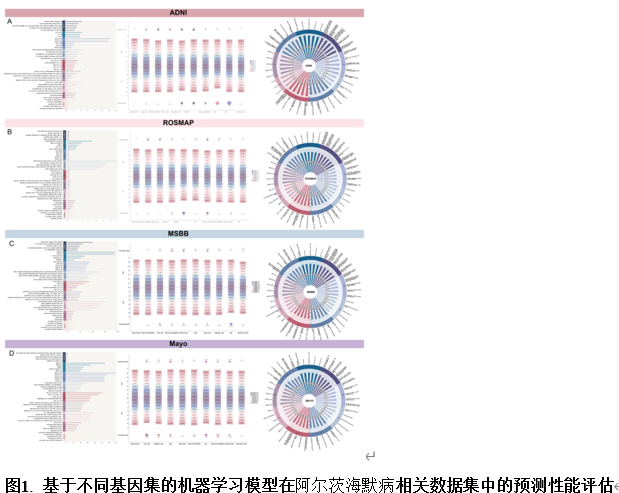
本研究首先通过生存分析模型对来自ADNI、ROSMAP、MSBB和Mayo四个数据集的基因集进行筛选(图1),并利用随机森林(RF)模型评估了各数据集中的预测准确性。结果表明,在ADNI数据集中,C5基因集的曲线下面积(AUC)为0.734,而在Mayo数据集中的C2基因集的AUC为0.846,表现出了较高的预测能力。这些数据表明,基因集筛选和机器学习模型在不同数据集中的效果具有差异,尤其是Mayo数据集具有最好的预测表现。通过这些分析,研究确定了与阿尔茨海默病风险相关的最重要基因集,并为进一步的疾病预测提供了基础。
-
免疫和代谢失调#br#
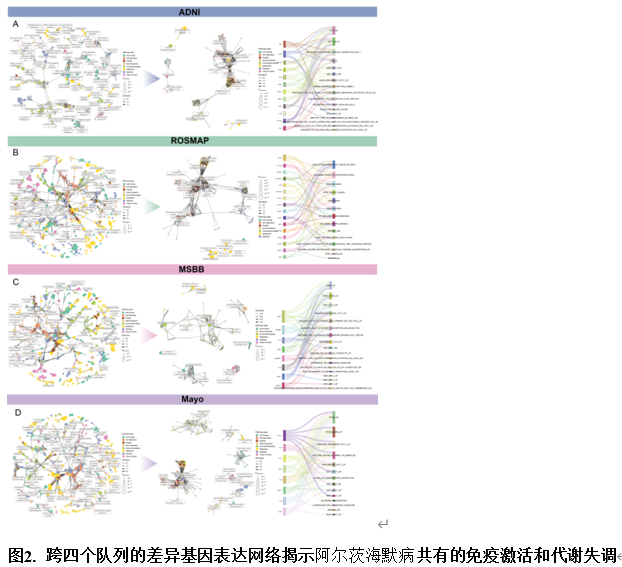
进一步的交叉数据集分析揭示了在阿尔茨海默病患者中,中性粒细胞脱颗粒过程(R-HSA-6798695)显著上调,而氧化磷酸化过程(R-HSA-611105)显著下调(图2)。免疫功能的上调与代谢功能的下调表明,免疫反应的激活和线粒体功能的受损在阿尔茨海默病的病理发展中扮演了关键角色。特别是中性粒细胞脱颗粒相关的免疫通路被发现与阿尔茨海默病的免疫失调密切相关,而氧化磷酸化通路的下调则突出了线粒体功能障碍对阿尔茨海默病的潜在贡献。
-
线粒体功能与免疫反应的交互作用#br#
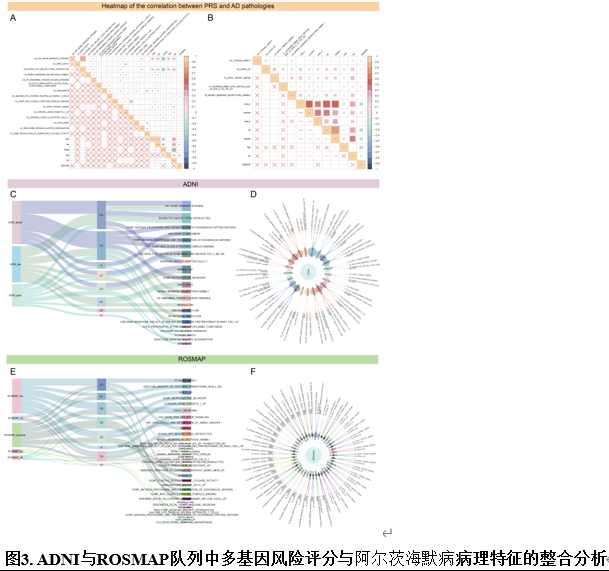
在对基因集和阿尔茨海默病病理的关系进行深入分析时,研究发现多个与线粒体功能相关的基因(如SGK1、LRRK1和NFKB1)在阿尔茨海默病进程中具有显著的作用(图3)。这些基因参与调节免疫反应和线粒体功能,提示免疫激活和线粒体功能障碍在阿尔茨海默病中的交互作用可能是促进病理进展的关键机制。这些结果为未来开发针对免疫反应和线粒体健康的治疗策略提供了新的靶点。
-
多基因风险评分与疾病关联#br#
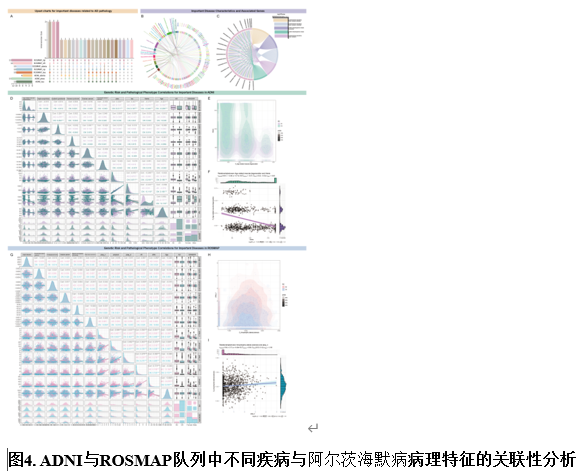
通过多基因风险评分(PRS)模型,我们进一步分析了年龄相关性黄斑变性(AMD)与阿尔茨海默病之间的关联,发现AMD与多个阿尔茨海默病的病理表型(包括Aβ水平、tau蛋白水平等)有显著的关联(图4)。这些发现表明,AMD与阿尔茨海默病共享一些共同的病理机制,如免疫反应、氧化应激以及Aβ聚集等,这为两种疾病的交叉治疗提供了新的视角。研究还揭示了与阿尔茨海默病相关的其他疾病的多基因风险评分,强调了免疫反应和代谢失调的共同作用。
-
表观遗传学分析#br#
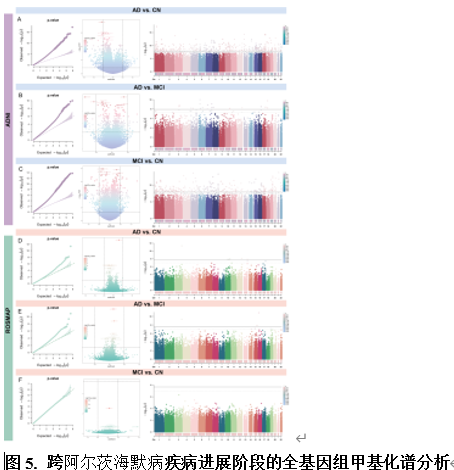
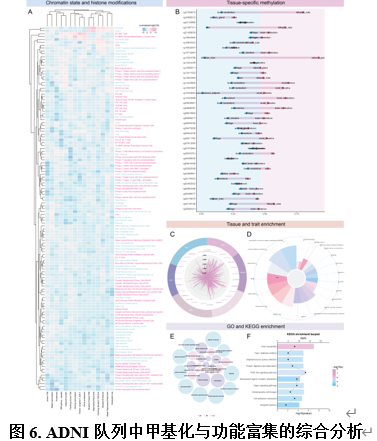
表观遗传学分析显示,在ADNI数据集和ROSMAP数据集中,阿尔茨海默病与健康对照(CN)之间的甲基化差异显著,ADNI数据集中的差异更为突出。阿尔茨海默病与CN之间,ADNI数据集显示出144个甲基化位点的差异,而ROSMAP数据集则为71个(图5)。这些差异的甲基化位点与神经系统相关的通路,尤其是PI3K-Akt信号通路和免疫反应通路之间表现出显著的关联(图6)。这些结果表明,表观遗传学变化可能在阿尔茨海默病的发病机制中发挥着重要作用,特别是通过影响关键的免疫与信号通路。
-
多组学调控网络分析#br#
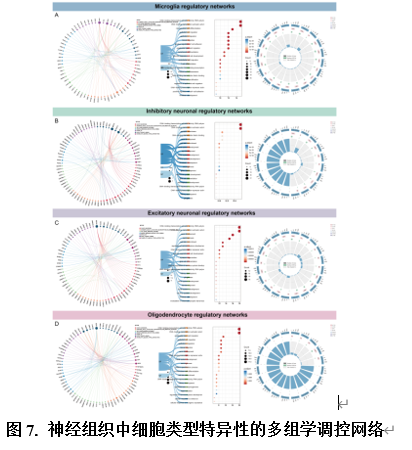
在多组学调控网络分析中,该研究通过构建不同神经细胞类型的基因调控网络,揭示了阿尔茨海默病相关基因集的相互作用(图7)。通过对微胶质细胞、抑制性神经元、兴奋性神经元和少突胶质细胞的调控网络进行分析,发现多个基因对阿尔茨海默病的进展起到了关键作用。特别是在微胶质细胞网络中,ATXN1和EBF1被发现调控了多个靶基因,并与C8_Manno Midbrain Neurotypes HNBML1和C8_Durante Adult Olfactory
Neuroepithelium Immature Neurons等基因集相关联。通过这一分析,我们揭示了多种细胞类型中基因的调控作用,为进一步了解阿尔茨海默病的分子机制提供了重要信息。
意义与结论
该研究通过多组学分析,揭示了阿尔茨海默病的遗传基础,特别是与免疫反应和线粒体功能紊乱相关的关键基因集和通路。研究表明,免疫激活、线粒体功能障碍和细胞信号转导通路在阿尔茨海默病的发展中扮演了重要角色。具体来说,研究发现TNF-α信号通路、线粒体相关基因(如SGK1、LRRK1、NFKB1)在阿尔茨海默病的发病机制中起着重要作用,这些基因不仅与免疫反应密切相关,而且参与了线粒体功能的调节。此外,跨数据集的分析还揭示了阿尔茨海默病患者与其他神经退行性疾病之间可能的共病关系,特别是在AMD等病理机制上的相似性,为未来的交叉疾病治疗提供了理论依据。
新延伸问题与下一步研究
尽管该研究提供了阿尔茨海默病机制的深入分析,但仍有多个问题需要进一步研究。首先,跨数据集的比较显示,样本的多样性和数据采集协议的差异可能影响结果的普适性,因此,未来研究需要扩大样本量,确保结果的广泛适用性。其次,虽然该研究聚焦于转录调控和基因集的分析,但未涉及蛋白质翻译后修饰和蛋白-蛋白相互作用,这对于全面理解阿尔茨海默病的病理机制至关重要。未来的研究应整合更多的多组学数据,包括蛋白组学、代谢组学和表观组学,以全面捕捉阿尔茨海默病的分子机制。此外,机器学习方法的引入为阿尔茨海默病的基因标志物筛选提供了新的途径,未来还可以进一步优化算法,探讨其在其他复杂疾病中的应用。
综上所述,该研究揭示了免疫反应和线粒体功能障碍在阿尔茨海默病进展中的重要作用。通过多组学分析和机器学习方法,研究识别出了与阿尔茨海默病相关的关键基因集合,尤其是与免疫反应和线粒体功能相关的基因,如SGK1、LRRK1和NFKB1等,这些基因可能成为未来治疗阿尔茨海默病的潜在靶点。研究表明,免疫通路(如TNF-α信号通路)和线粒体功能的紊乱与阿尔茨海默病的神经退行性改变密切相关,为阿尔茨海默病的早期诊断和靶向治疗提供了理论依据。
然而,该研究也存在一些局限性。首先,研究主要基于ADNI、ROSMAP、MSBB和Mayo四个队列的数据,尽管涵盖了不同的人群和地区,但样本的异质性可能影响结果的普适性,因此未来的研究可以通过多样本、多中心的数据验证其发现。其次,虽然研究采用了多种机器学习算法进行基因集富集分析,但基因交互作用的复杂性和模型的过拟合风险仍需要进一步优化和验证。此外,研究聚焦于转录调控层面的分析,未涉及蛋白质修饰及蛋白质-蛋白质相互作用等重要因素,未来可以结合蛋白质组学和代谢组学来拓展阿尔茨海默病的分子机制。
总的来说,该项工作为阿尔茨海默病的免疫和线粒体功能障碍提供了新的见解,为未来的精准治疗策略奠定了基础。尽管研究存在局限性,但其为深入理解阿尔茨海默病的多层次机制提供了重要的理论支持,未来应继续加强多组学数据的整合,探索新的生物标志物和治疗靶点。
#br#
参考文献#br#
[1] Ashleigh T, Swerdlow RH, Beal MF. The role of mitochondrial dysfunction in alzheimer’s disease pathogenesis. Alzheimers Dement 2023;19:333-342. #br#
[2] Kunkle BW, Grenier-Boley B, Sims R, et al. Genetic meta-analysis of diagnosed Alzheimer’s disease identifies new risk loci and implicates Aβ, tau, immunity and lipid processing. Nat Genet 2019;51:414-430.#br#
[3] Dourlen P, Kilinc D, Malmanche N, et al. The new genetic landscape of Alzheimer’s disease: from amyloid cascade to genetically driven synaptic failure hypothesis? Acta Neuropathol 2019;138:221-236.#br#
#br#
#br#
