中国神经再生研究(英文版) ›› 2026, Vol. 21 ›› Issue (6): 2485-2494.doi: 10.4103/NRR.NRR-D-24-01021

• 原著:脊髓损伤修复保护与再生 • 上一篇    下一篇

激活素A抑制自噬可促进创伤性脊髓损伤神经功能的恢复


  • 出版日期:2026-06-15 发布日期:2026-04-18

Activin A enhances neurofunctional recovery following traumatic spinal cord injury by inhibiting autophagy

Liqun Yu1, 2, #, Zhaoyang Yin3, #, Ruiqi Huang1, 2, Zhibo Liu1, 2, Yuchen Liu1, 2, Xinxin Zheng1, 2, Simin Song1, 2, Zhaojie Wang1, 2, Xiaolie He1, 2, Yuxin Bai1, 2, Li Yang1, 2, Xu Xu1, 2, Bairu Chen1, 2, Jian Yin4, *, Yanjing Zhu1, 2, *   

  1. 1Key Laboratory of Spine and Spinal Cord Injury Repair and Regeneration of Ministry of Education, School of Medicine, School of Life Science and Technology, Tongji Hospital Affiliated to Tongji University, Tongji University, Shanghai, China; 
    2Clinical Center for Brain and Spinal Cord Research, Tongji University, Shanghai, China; 
    3Department of Orthopedics, The First People’s Hospital of Lianyungang, The Affiliated Lianyungang Hospital of Xuzhou Medical University, Lianyungang, Jiangsu Province, China; 
    4Department of Orthopedics, The Affiliated Jiangning Hospital of Nanjing Medical University, Nanjing, Jiangsu Province, China
  • Online:2026-06-15 Published:2026-04-18
  • Contact: Yanjing Zhu, PhD, 0519zyj@tongji.edu.cn; Jian Yin, MD, yinjiandoc@163.com.
  • Supported by:
    This study was financially supported by the National Natural Science Foundation of China, Nos. 82271419, 81901902 (to YZ), 82202702 (to ZW), 82202351 (to XH), 82301550 (to LYang), 82271418 (to XX); the Shanghai Rising-Star Program, No. 22QA1408200 (to YZ); and the Fundamental Research Funds for the Central Universities, No. 22120220555 (to YZ).

摘要:

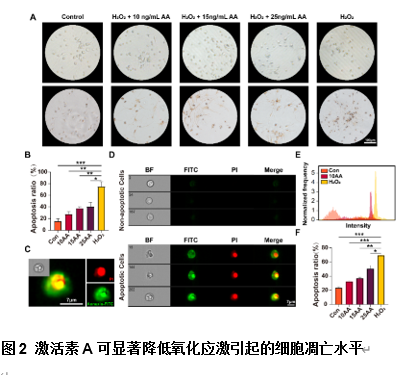
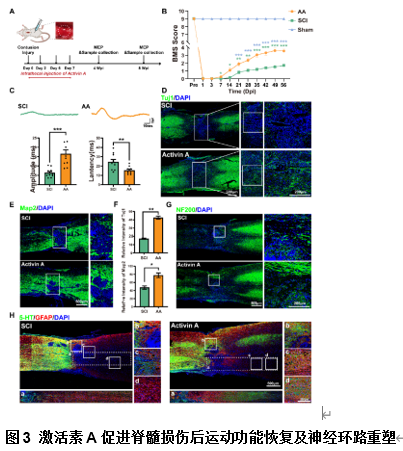
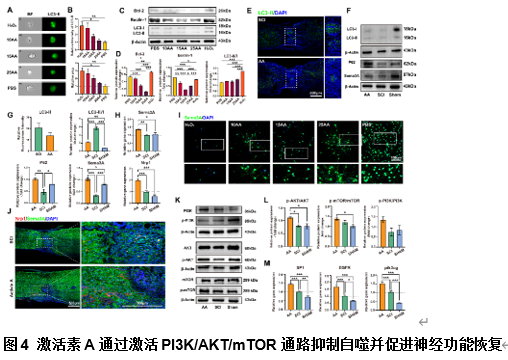
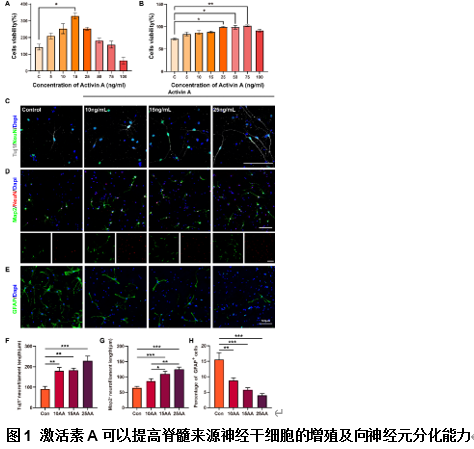
在创伤性脊髓损伤早期,自噬体大量积累会导致神经毒性微环境,加剧神经细胞死亡和组织损伤,最终阻碍神经功能的恢复。激活素A是胚胎神经系统发育和成年大脑皮质神经元功能维持所必需的关键生长因子,可抑制缺血性脑卒中中过度自噬,以减少神经元损伤;然而其对脊髓损伤的作用尚不可知。此次实验首先对脊髓来源的神经干细胞施加了不同浓度梯度的激活素A,可见激活素A刺激了神经干细胞的增殖和神经元的分化。然后以双氧水刺激神经干细胞分化的神经元建立体外氧化应激模型,发现激活素A可减少由氧化应激刺激引起的细胞凋亡。继而给予脊髓挫伤模型小鼠鞘内注射激活素A进行干预。行为学和电生理结果显示,激活素A可促进模型小鼠运动功能恢复和神经回路重建。最后,RNA测序表明,激活素A 通过激活PI3K/AKT/mTOR通路抑制了自噬,且激活素A上调了脊髓组织中突触发生相关因子Sema3A表达。上述结果表明,激活素A可参与介导脊髓损伤后的过度自噬反应,促进受损神经回路的重建,进而恢复损伤脊髓的神经功能。


https://orcid.org/0000-0002-2564-1176 (Yanjing Zhu)
 

关键词: 脊髓损伤, 激活素A, 神经干细胞, 神经再生, 运动功能恢复, 神经保护, 自噬, PI3K/AKT通路, 转化生长因子β超家族, 细胞分化

Abstract: In the early stages of traumatic spinal cord injury, extensive accumulation of autophagosomes creates a neurotoxic microenvironment, exacerbating neuronal cell death and worsening tissue damage, ultimately hindering neurofunctional recovery. Activin A is a critical growth factor necessary for the development of the embryonic nervous system and for maintaining neuronal function in the adult cerebral cortex. It can inhibit excessive autophagy in ischemic stroke to reduce neuronal damage. However, the specific mechanism through which Activin A functions in the spinal cord remains poorly understood. In this study, we administered different concentrations of Activin A to neural stem cells from the spinal cord and found that Activin A stimulated the proliferation and neuronal differentiation of neural stem cells. Then, we established an in vitro oxidative stress model by using hydrogen peroxide to stimulate the neural stem cells-induced neurons. We found that Activin A could reduce apoptosis caused by oxidative stress. Subsequently, we treated a mouse model of spinal cord contusion with intrathecal injection of Activin A. Behavioral and electrophysiological results showed that Activin A promoted recovery of motor function and reconstruction of neural circuits in the model mice. Finally, RNA sequencing indicated that Activin A inhibited autophagy by activating the PI3K/AKT/mTOR pathway and upregulating the expression of synaptogenesis-related factor Sema3A in the spinal cord. These results suggest that Activin A may mediate the excessive autophagic response after spinal cord injury, promote the reconstruction of damaged neural circuits, and restore neurological function in the injured spinal cord.

Key words: Activin A, autophagy, cell differentiation, motor function recovery, neural regeneration, neural stem cell, neuroprotection, phosphoinositide 3-kinase/protein kinase B pathway, spinal cord injury, transforming growth factor-β superfamily