NRR:中国青岛大学吴桐团队设计了一种修复创伤性脑损伤的新型复合生物活性纳米纤维硬脑膜
撰文:陈思宇
创伤性脑损伤(Traumatic brain injury)是由于头部受到钝器撞击、剧烈撞击或穿透伤等因素导致的脑损伤[1, 2]。这些损害会破坏大脑中突触回路和高度组织化的网络系统,影响个体的正常生活和社会功能[3, 4]。创伤性脑损伤导致的硬脑膜缺损缺乏自我封闭能力,须及时进行硬脑膜修复手术,以确保其解剖学上的完整性。静电纺丝技术已广泛应用于组织修复和再生医学[5]。然而,目前大多数电纺人工硬脑膜普遍存在功能局限。例如,部分电纺硬脑膜虽能有效防止组织黏连,但其抗渗漏性能不足;而另一些虽具备良好抗渗漏性能的,则生物活性欠缺,难以有效促进神经组织修复 [6]。更重要的是,传统基于单一给药系统的电纺硬脑膜,无法满足创伤性脑损伤后不同阶段的神经修复需求。尽管某些电纺人工硬脑膜显示出神经修复潜力,但它们未能有效减轻损伤后的过度炎症反应 [7]。同样,有些硬脑膜虽具备抗粘连和修复功能,其药物释放能力却无法匹配损伤后的病理进程时间线 [8]。这些局限性表明,现有电纺硬脑膜对创伤性脑损伤后神经功能障碍的疗效有限,对创伤性脑损伤不同病理阶段的修复支持不足以及对复杂脑环境的适应能力差。
中国青岛大学吴桐团队在《中国神经再生研究(英文)》(Neural Regeneration Research)上发表了题为“Complex bioactive nanofibrous dura mater repairs traumatic brain
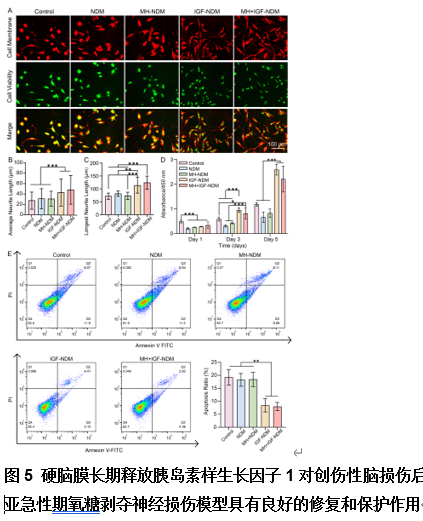
injury”的研究。实验设计并制备了多层纳米纤维硬膜材料(MNDM)用于创伤性脑损伤修复。结果表明,该材料能促进SH-SY5Y细胞在神经突断裂、氧糖剥夺及氧化应激等损伤模型中的存活与神经突延伸。通过分别将盐酸米诺环素和胰岛素样生长因子1引入纤维中,实现了早期免疫调节与修复过程中神经保护的双重递送功能。此外,MNDM还能增强小胶质细胞M2极化水平及抗炎细胞因子分泌,显著提升神经细胞存活率。其抗菌性能、抗粘连性、屏障功能、防渗漏性和生物相容性等特性也得到验证。综上所述,这种MNDM在应对脑外伤后复杂脑病理变化方面展现出显著潜力,为解决创伤性脑损伤后的硬脑膜缺损问题提供了新思路。
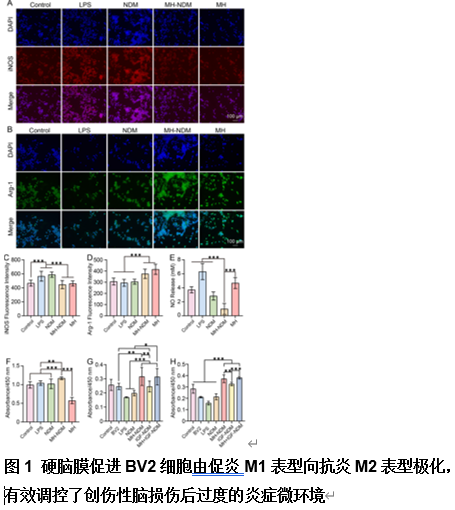
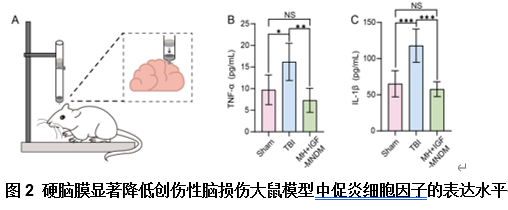
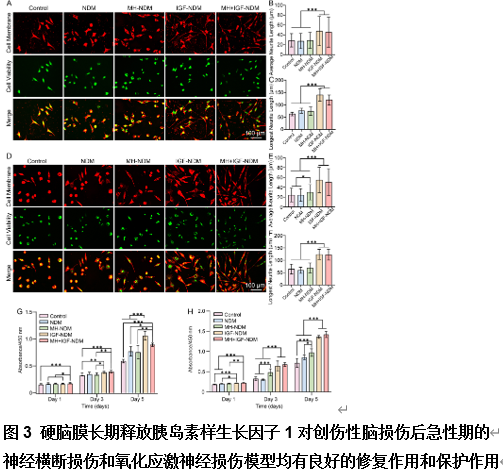
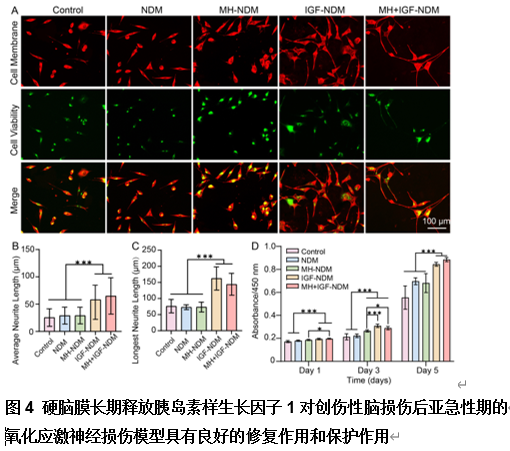
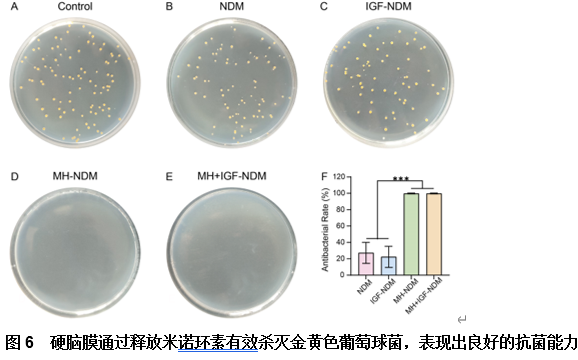
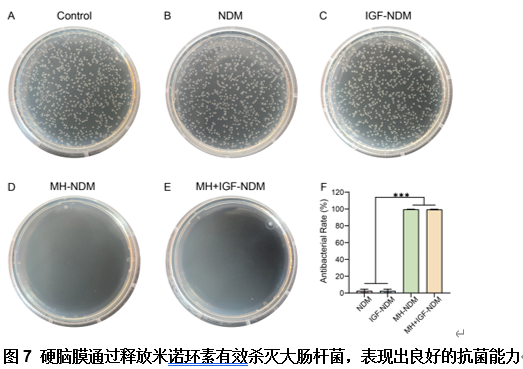
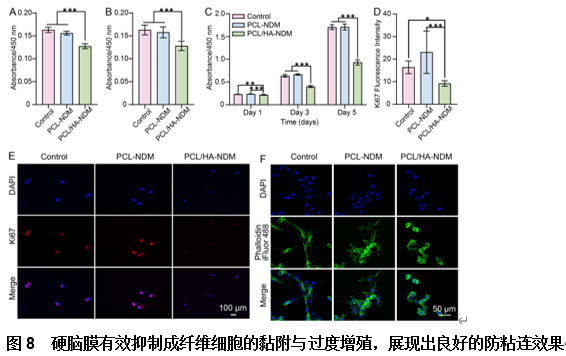
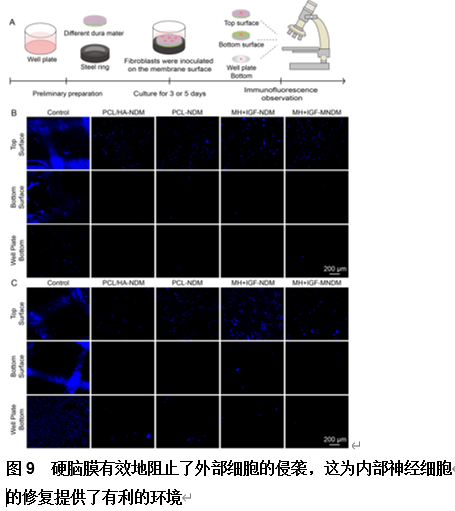
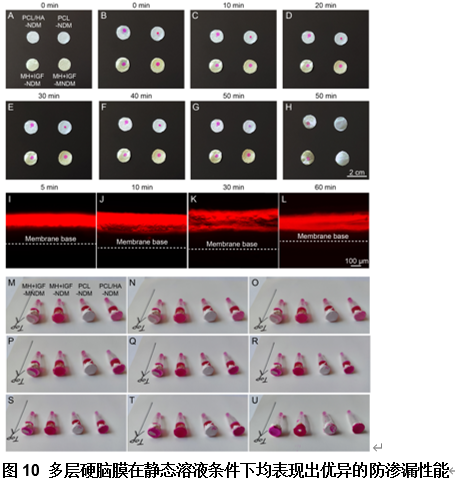
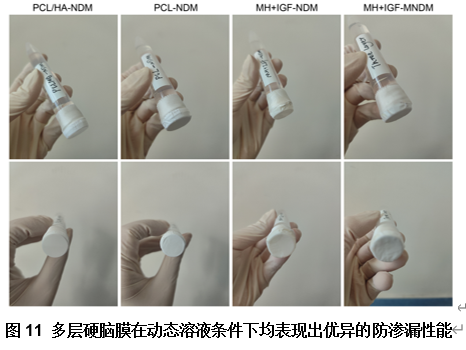
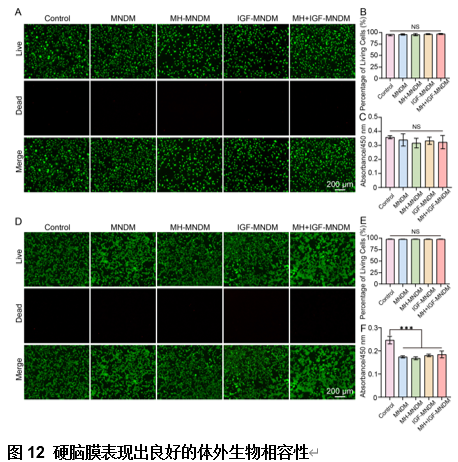
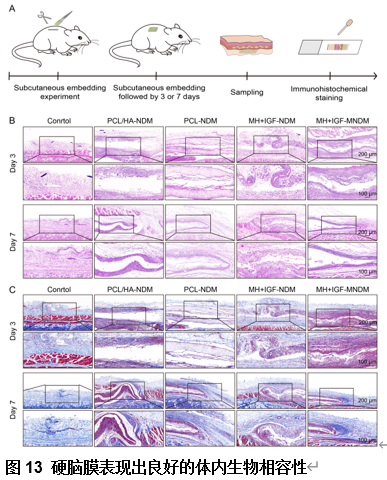
创伤性脑损伤后的急性损伤阶段,炎症因子的过度表达阻碍了神经存活,增加了神经损伤的严重程度 [9]。同时,脑损伤后的修复是一个漫长的过程。氧化应激、缺血再灌注等继发性神经损伤会不断破坏神经细胞的存活,阻碍神经修[10]。因此,创伤性脑损伤的急性期需要抗炎干预来阻断炎症级联反应对神经存活的影响,同时需要建立长期的治疗策略来应对继发性损伤的过程,并为损伤的神经提供持续的修复和保护。吴桐等将米诺环素包裹在双层核壳纳米纤维的壳层内。创伤性脑损伤早期米诺环素的快速释放可促进BV2细胞由促炎M1表型向抗炎M2表型极化,有效调控了创伤性脑损伤后过度的炎症微环境(图1)。创伤性脑损伤大鼠模型结果显示,硬脑膜显著降低促炎细胞因子的表达水平(图2)。为实现创伤性脑损伤后神经的长期修复,实验采用双层包封策略将胰岛素样生长因子1负载至双层核壳纳米纤维的核心结构中,实现胰岛素样生长因子1的长期持续释放。结果表明,硬脑膜长期释放胰岛素样生长因子1对创伤性脑损伤后不同神经损伤均有良好的修复和保护作用(图3-5)。这种阶段适应性干预策略有效阻断了与创伤性脑损伤相关病理过程的级联反应,为改善远期神经功能转归提供了创新解决方案。为更好地修复受损神经,减轻脑损伤后并发症。硬脑膜需要具备抗菌、防黏附、防渗漏、屏障等多种功能。颅脑手术后感染控制是影响预后的关键因素,硬脑膜通过释放米诺环素有效杀灭金黄色葡萄球菌和大肠杆菌,表现出良好的抗菌能力(图6和7)。在预防术后黏连方面,实验通过引入透明质酸制备的外层纳米纤维硬脑膜(polycaprolactone/hyaluronic acid-nanofiber dura mater,PCL/HA-NDM)有效抑制成纤维细胞的黏附与过度增殖,展现出良好的防粘连效果(图8)。此外,硬脑膜本身致密的纤维结构为细胞提供了物理屏障功能。硬脑膜有效地阻止了外部细胞的侵袭,从而避免了脑内组织粘连和纤维化的形成,这为内部神经细胞的修复提供了有利的环境(图9)。脑脊液漏可引起严重感染甚至死亡,所构建的MNDM在动态和静态溶液条件下均表现出优异的防渗漏性能,有利于维持脑组织内压的稳定(图10和11)。硬脑膜作为一种神经外科植入物,与脑组织直接接触。因此,硬脑膜需要具有较高的生物相容性标准。活/死膜染色、皮下包埋等体内外生物相容性实验表明,硬脑膜具有良好的生物相容性,保证了其作为物理屏障的安全性和功能性(图12和13)。这些结果表明MNDM可从多个方面促进脑损伤后的修复过程,为患者提供更好的治疗效果,在脑损伤后的神经修复中具有广阔的应用前景。
#br#
综上所述,吴桐等通过创新设计与制造方法成功制备了MNDM,并研究其对创伤性脑损伤后的修复效果。采用乳液静电纺丝技术和同轴静电纺丝技术制备具有差异性双释放机制的硬脑膜,可有效促进创伤性脑损伤后受损神经的修复。硬脑膜早期释放米诺环素能有效调节急性期炎症环境,提高受损神经细胞存活率。胰岛素样生长因子1的持续释放为受损神经组织提供长期修复和保护。此外硬脑膜具有抗菌、防渗漏、抗粘连、屏障功能及良好的生物相容性等多重功能特性,这种MNDM在创伤性脑损伤后具有很好的应用潜力,未来有望得到更广泛的应用。
尽管MNDM在处理创伤性脑损伤后的复杂病理过程方面效果显著,但仍存在局限。研究初步证实MNDM可通过促进神经突再生和抑制细胞凋亡来改善炎症微环境并发挥神经保护作用。然而,研究中未系统探究MNDM通过调控哪些信号通路促进创伤性脑损伤的具体机制。基于这些发现和局限性,未来的研究需要进一步通过蛋白印迹、流式细胞术和动物实验等多种实验阐明MNDM调控创伤性脑损伤后炎症微环境及神经保护作用的分子机制。
#br#
原文链接:https://doi.org/10.4103/NRR.NRR-D-25-00621
#br#
参考文献#br#
[1]
Lang L, Wang T, Xie L, et al. An independently validated nomogram for individualised estimation of short-term mortality risk among patients with severe traumatic brain injury: a modelling analysis of the CENTER-TBI China Registry Study. EClinicalMedicine. 2023;59:101975.#br#
[2]
Savelieff MG, Feldman EL. Traumatic brain injury: a success stemming from stem cells. Neurology. 2021;96(8):357-358.#br#
[3]
Zhou M, Liu YW, He YH, et al. FOXO1 reshapes neutrophils to aggravate acute brain damage and promote late depression after traumatic brain injury. Mil Med Res. 2024;11(1):20.#br#
[4]
Zhao ZA, Yan L, Wen J, et al. Cellular and molecular mechanisms in vascular repair after traumatic brain injury: a narrative review. Burns Trauma. 2023;11:tkad033.#br#
[5]
Chen R, Wang Y, Yu C, et al. Bioactive glass-reinforced hybrid microfibrous spheres promote bone defect repair via stem cell delivery. Adv Fiber Mater. 2025;7(1):240-253.#br#
[6]
Sun S, Luo H, Wang Y, et al. Artificial spinal dura mater made of gelatin microfibers and bioadhesive for preventing cerebrospinal fluid leakage. Chem Commun (Camb). 2024;60(17):2353-2356.#br#
[7]
Wang Y, Guo Q, Wang W, et al. Potential use of bioactive nanofibrous dural substitutes with controlled release of IGF-1 for neuroprotection after traumatic brain injury. Nanoscale. 2022;14(48):18217-18230.#br#
[8]
Liao J, Li X, He W, et al. A biomimetic triple-layered biocomposite with effective multifunction for dura repair. Acta Biomater. 2021;130:248-267.#br#
[9]
Kalra S, Malik R, Singh G, et al. Pathogenesis and management of traumatic brain injury (TBI): role of neuroinflammation and anti-inflammatory drugs. Inflammopharmacology. 2022;30(4):1153-1166.#br#
[10]
Fesharaki-Zadeh A. Oxidative stress in traumatic brain injury. Int J Mol Sci. 2022;23(21):13000.#br#
