中国神经再生研究(英文版) ›› 2026, Vol. 21 ›› Issue (8): 3717-3729.doi: 10.4103/NRR.NRR-D-24-01612

• 原著:脊髓损伤修复保护与再生 • 上一篇    下一篇

抑制Tp53表达减轻脊髓损伤后的铁死亡


  • 出版日期:2026-08-18 发布日期:2026-04-27
  • 基金资助:
    项目受到国家自然科学基金(Nos. 81871785, 81672161, 82372411)与安徽省卫生健康科研项目(No.AHWJ2023A30106)的支持

TP53 drives neuronal ferroptosis by promoting KLHL4-mediated SLC7A11 ubiquitination after spinal cord injury

Yu Kang1, 2, 3, #, Qiangwei Li4, #, Tianlun Zhao1, #, Haojie Zhang1, #, Yuejian Sun1, 2, Yilong Zhang1, 2, Da An1, 2, Zongsheng Yin3, *, Yong Xuan3, 5, *, Peigen Xie1, 2, *   

  1. 1Department of Spine Surgery, The Third Affiliated Hospital, Sun Yat-sen University, Guangzhou, Guangdong Province, China; 
    2Department of Orthopedics, Zhaoqing Hospital, The Third Affiliated Hospital of Sun Yat-sen University, Zhaoqing, Guangdong Province, China; 
    3Department of Orthopedics, The First Affiliated Hospital of Anhui Medical University, Hefei, Anhui Province, China; 
    4School of Basic Medical Sciences, Anhui Medical University, Hefei, Anhui Province, China; 
    5Department of Orthopedics, The Second People’s Hospital of Hefei, Hefei, Anhui Province, China

  • Online:2026-08-18 Published:2026-04-27
  • Contact: Peigen Xie, MD, PhD, xiepgen@mail.sysu.edu.cn; Yong Xuan, MD, xy15251620255@163.com; Zongsheng Yin, MD, PhD, ahmu_zsyin@163.com.
  • Supported by:
    This work was supported by the National Natural Science Foundation of China, Nos. 81672161, 81871785, 82372411 (to ZY); the Health Research Project of Health Commission of Anhui Province, No. AHWJ2023A30106 (to YX).

摘要:

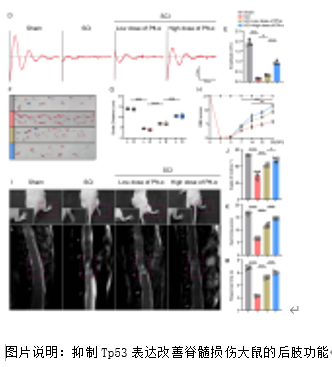
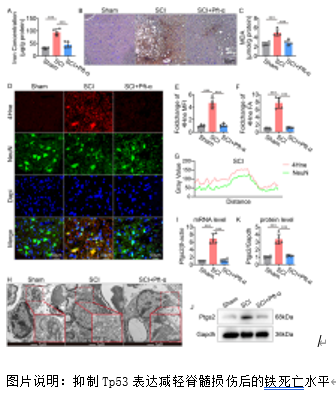
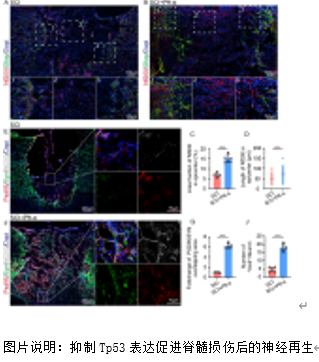
铁死亡是脊髓损伤后发生的关键病理事件,对神经功能的恢复构成重大挑战。Slc7a11在维持细胞氧化还原稳态和抵抗铁死亡方面至关重要。脊髓损伤后Slc7a11下调导致的神经元铁死亡的机制尚不明确。研究提供了证据表明,作为Slc7a11的负调节因子,Tp53在脊髓损伤后显著上调。转录组分析显示Tp53与损伤严重程度相关。随后,实验通过脊髓挫伤大鼠模型验证了脊髓损伤发生后,Tp53 的表达会上升,并在与 mRNA 转录和蛋白质泛素化相关的生物过程中显著富集;抑制 Tp53 显著减轻了脊髓损伤大鼠的铁死亡表型,并加速了神经功能的恢复。体外实验证实了Tp53 可通过促进 Klhl4 的转录来增加 Slc7a11 的泛素化水平,在此过程中Kelch结构域对Klhl4识别底物蛋白Slc7a11至关重要。综上所述,研究阐明了Tp53介导的脊髓损伤中神经元铁死亡的机制,为临床转化提供了潜在靶点和启示。


https://orcid.org/0000-0002-5605-9103 (Peigen Xie); 

https://orcid.org/0009-0003-6241-4217 (Yong Xuan); 

https://orcid.org/0000-0002-4862-5443 (Zongsheng Yin)
关键词: 生物信息学, CUT&, Tag, 铁死亡, Gpx4, Klhl4, 神经再生, 神经元存活, Slc7a11, 脊髓损伤, Tp53, 泛素化

Abstract: Ferroptosis constitutes a pivotal pathological event following spinal cord injury and presents substantial challenges to the restoration of neurological function. Cystine-glutamate transporter SLC7A11 is essential for maintaining cellular redox homeostasis and resisting ferroptosis. However, the mechanisms underlying neuronal ferroptosis caused by SLC7A11 downregulation following spinal cord injury remain unclear. Herein, we provide evidence that tumor protein 53, a negative regulator of SLC7A11, was significantly upregulated post–spinal cord injury. Transcriptomic analysis indicated that tumor protein 53 was associated with injury severity. We subsequently confirmed that tumor protein 53 inhibition restored the expressions of SLC7A11 and glutathione peroxidase 4, alleviated neuronal ferroptosis, and improved neurological function in a contusion spinal cord injury rat model. The regulatory effects of tumor protein 53 on the transcription and ubiquitination of SLC7A11 were further elucidated using chromatin immunoprecipitation polymerase chain reaction and cleavage under targets and tagmentation techniques. Additionally, Kelch-like protein 4, an E3 ubiquitin ligase adaptor, was demonstrated to play an important role in the tumor protein 53-mediated ubiquitination of SLC7A11. In summary, the present study elucidated the possible mechanisms of tumor protein 53–mediated neuronal ferroptosis in spinal cord injury, thereby providing potential targets and insights for clinical translation.

Key words: bioinformatics, ferroptosis, glutathione peroxidase 4, Kelch-like protein 4, nerve regeneration, neuronal survival, SLC7A11, spinal cord injury, tumor protein 53, ubiquitination