中国神经再生研究(英文版) ›› 2026, Vol. 21 ›› Issue (8): 3609-3619.doi: 10.4103/NRR.NRR-D-24-01479

• 原著:脑损伤修复保护与再生 • 上一篇    下一篇

超短波疗法可通过抑制Piezo1促进创伤性脑损伤的神经恢复


  • 出版日期:2026-08-18 发布日期:2026-04-27

Ultrashort wave therapy promotes traumatic brain injury recovery by suppressing neuroinflammation

Chuang Xu1, 2, 3, #, Jinwei Liu1, 2, 3, #, Qiaozhen Qin2, Heyang Zhang2, Xiaotong Li2, Yue Chen2, Zhenhua Xu2, Fang Wang3, Nihui Zhang3, Zhen Zhang1, 3, Yifei Tan2, 4, Lingyu Zhang4, Guilin Chen1, Liu Liu1, Weiwei Xing2, Yan Wang2, Huaqiang Ruan2, *, Xiaoxia Jiang2, 4, *, Nan Peng3, *   

  1. 1Graduate School of the Chinese PLA General Hospital, Beijing, China; 
    2Beijing Institute of Basic Medical Sciences, Beijing, China; 
    3Department of Rehabilitation Medicine, The Second Medical Center & National Clinical Research Center for Geriatric Diseases, Chinese PLA General Hospital, Beijing, China; 
    4Anhui Medical University, Hefei, Anhui Province, China
  • Online:2026-08-18 Published:2026-04-27
  • Contact: Huaqiang Ruan, PhD, hq.ruan@foxmail.com; Xiaoxia Jiang, PhD, smilovjiang@163.com; Nan Peng, PhD, pengnan301@163.com.
  • Supported by:
    This study was supported by grants from Beijing Natural Science Foundation, No. 7242278; and National Natural Science Foundation of China, No. 32471422 (both to XJ).

摘要:

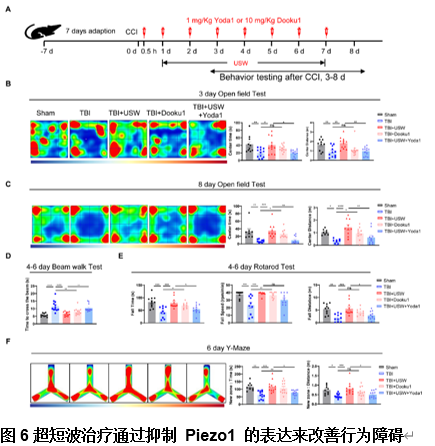
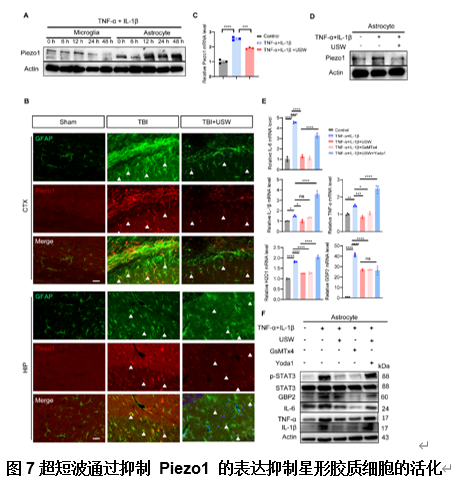
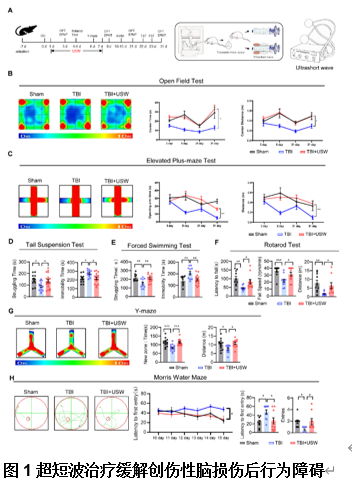
尽管创伤性脑损伤有多种治疗方法,但仍然缺乏能有效缓解其进程的理想措施。超短波疗法是一种物理疗法,已被广泛应用于多种疾病,但其对创伤性脑损伤的影响及其潜在机制尚不清楚。此次实验发现超短波治疗可显著创伤性脑损伤小鼠脑损伤后神经修复,缓解情绪和认知功能,并抑制体内神经胶质细胞活化和神经炎症。进一步体外实验发现,超短波可抑制C8-D1A星形胶质细胞和BV2小胶质细胞的激活。此外,创伤性脑损伤可诱导小鼠脑组织中Piezo1的高表达,而超短波可有效抑制其表达,且Piezo1激动剂Yoda1可逆转超短波的有益作用。同样,Yoda1也能逆转超短波对C8-D1A星形胶质细胞活化的抑制作用。由此表明,超短波是治疗创伤性脑损伤的一种理想策略,其作用是通过抑制Piezo1,减轻神经炎症,进而促进创伤性脑损伤后神经修复。


https://orcid.org/0009-0004-1233-5294 (Huaqiang Ruan); 

https://orcid.org/0000-0003-1401-9653 (Xiaoxia Jiang); 

https://orcid.org/0000-0003-4509-8964 (Nan Peng)
关键词: 缓解, 星形胶质细胞, 认知障碍, 情绪障碍, 损伤修复, 神经炎症, 神经系统疾病, Yoda1, 创伤性脑损伤, 超短波

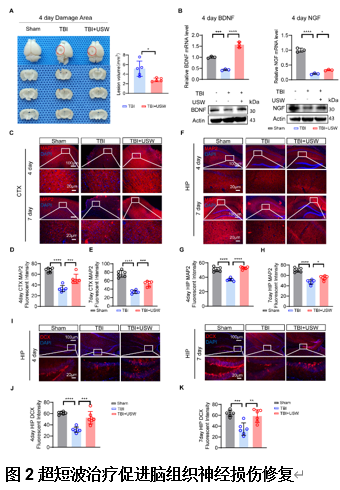
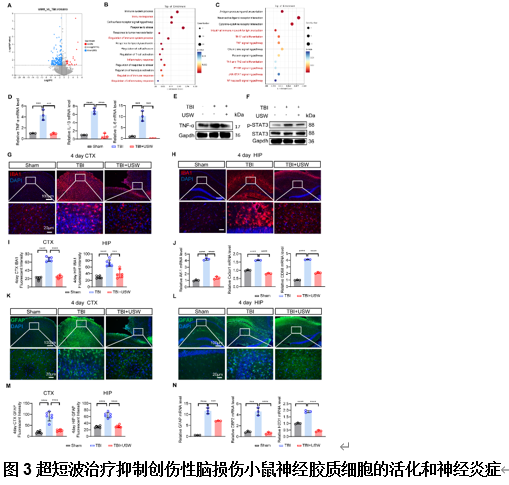
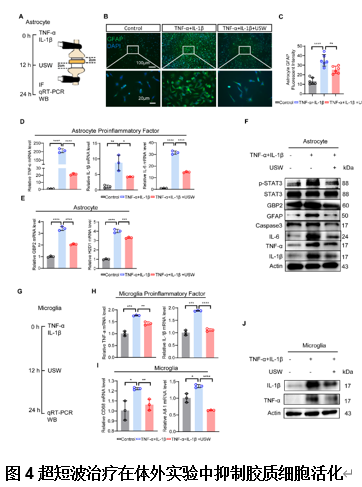
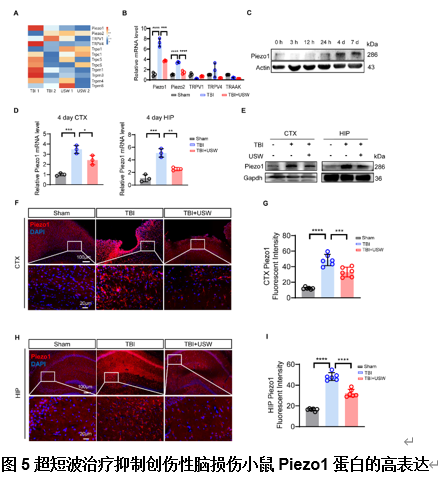
Abstract: Despite growing treatments for traumatic brain injury, there is still no ideal strategy for efficiently mitigating these processes. Ultrashort wave therapy, a type of physical factor therapy, has been widely used in various clinical treatments. However, its effects on traumatic brain injury and the underlying mechanisms are not well understood. In this study, we demonstrate that ultrashort wave treatment can significantly promote injury repair and alleviate emotional and cognitive disorders. Our data showed that ultrashort wave reduced the levels of pro-inflammatory factors and inhibited neuroinflammation. In vitro experiments showed that ultrashort wave inhibited activation of C8-D1A astrocytes and BV2 microglia. Furthermore, traumatic brain injury induced the expression of Piezo1, while ultrashort wave effectively suppressed this high expression. Administration of Yoda1, a Piezo1 agonist, to traumatic brain injury mice reversed the beneficial effects of ultrashort wave. Consistently, Yoda1 also reversed the inhibitory effect of ultrashort wave on activation of C8-D1A astrocytes. These findings indicate that ultrashort wave is an ideal therapeutic strategy for traumatic brain injury, which works by inhibiting Piezo1, reducing neuroinflammation, and promoting nerve repair after traumatic brain injury. 

Key words: astrocyte, cognitive disorders, emotional disorders, lesion repair, neuroinflammation, neurological disorders, Piezo1, traumatic brain injury, ultrashort wave