中国神经再生研究(英文版) ›› 2026, Vol. 21 ›› Issue (8): 3807-3814.doi: 10.4103/NRR.NRR-D-25-00107

• 原著:退行性病与再生 • 上一篇    下一篇

携带特定线粒体单倍群帕金森病患者星形胶质细胞的缺氧及TTR基因表达失调:单核细胞转录组解析


  • 出版日期:2026-08-18 发布日期:2026-04-28

 Hypoxia and TTR dysregulation in astrocytes from Parkinson’s disease with a specific mitochondrial haplogroup: A single-cell analysis

Junhao Wang1, 2, #, Wenxuan Du1, 2, #, Xinyi Chen1, 2, Hao Wu1, 2, Ganqiang Liu1, 2, 3, *   

  1. 1Shenzhen Key Laboratory of Systems Medicine in Inflammatory Diseases, School of Medicine, Shenzhen Campus of Sun Yat-sen University, Shenzhen, Guangdong Province, China; 
    2Neurobiology Research Center, School of Medicine, Shenzhen Campus of Sun Yat-sen University, Shenzhen, Guangdong Province, China; 
    3Guangdong Provincial Key Laboratory of Brain Function and Disease, Guangzhou, Guangdong Province, China
  • Online:2026-08-18 Published:2026-04-28
  • Contact: Ganqiang Liu, PhD, liugq3@mail.sysu.edu.cn.
  • Supported by:
    This study was supported by the Shenzhen Fundamental Research Program, No. JCYJ20240813151132042; the National Natural Science Foundation of China, Nos. 32270701 and 32470708; Young Talent Recruitment Project of Guangdong, No. 2019QN01Y139; the Science and Technology Planning Project of Guangdong Province, No. 2023B1212060018 (all to GL).

摘要:

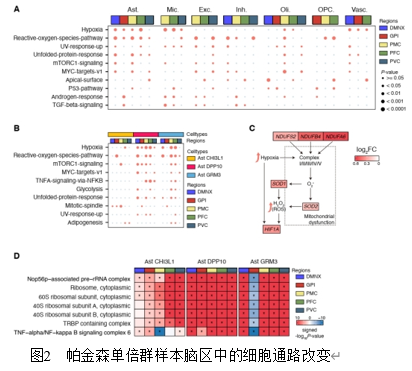
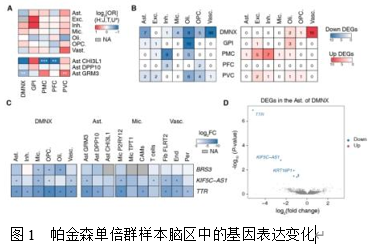
线粒体DNA(mtDNA)变异与帕金森病的认知进展相关,但mtDNA变异或单倍型群如何参与这一过程的机制尚不明确。此研究通过通过对不同线粒体单倍群帕金森病患者死后不同脑区的单核细胞转录组解析发现,线粒体单倍群H亚群新皮层区域中星形胶质细胞(Ast)亚型Ast CHI3L1和Ast GRM3的比例发生显著改变。值得注意的是,H亚群X神经背侧运动核(DMNX)区域中TTR基因表达显著下调。通路分析显示星形胶质细胞中存在异常的缺氧和活性氧(ROS)环境,而蛋白质复合物分析表明Ast亚型中核糖体亚基复合物的一致性显著升高。通过构建加权有向全转录组基因调控网络,发现H亚群星形胶质细胞亚型中SP1和HOXA5的活性发生显著变化。此外,观察到多个转录因子对TTR基因转录调控的广泛失调。此外,H 型单倍群的帕金森病患者在某些脑区显示出网络功能连接性增强。这项数据驱动的研究强调了线粒体 DNA 单倍群通过细胞组成变化、差异基因表达、通路紊乱和基因调控网络参与帕金森病认知进展的潜在机制。此研究构建mtDNA单倍群H驱动帕金森病认知障碍的多维度调控框架,为帕金森病精准诊疗提供了新思路。


https://orcid.org/0000-0002-1921-9542 (Ganqiang Liu)
关键词: 星形胶质细胞, 脑网络功能连接性, 认知进展, 基因调控网络, H单倍型群, 线粒体DNA变异, 多脑区, 帕金森病, 活性氧, 单核RNA测序

Abstract:

Mitochondrial DNA variants have been linked to cognitive progression in Parkinson’s disease; however, the mechanisms by which mitochondrial DNA variants or haplogroups contribute to this process remain unclear. In the present study, we analyzed single-nucleus RNA sequencing data from 241 post-mortem brain samples across five regions to investigate the dysregulatory mechanisms associated with mitochondrial DNA haplogroup H and haplogroups J, T, and U#. Our findings revealed significant alterations in the proportions of astrocyte subtypes CHI3L1 and GRM3 in the neocortical regions of haplogroup H. Notably, TTR was markedly downregulated in the dorsal motor nucleus of the Xth nerve region of patients with haplogroup H. Pathway analysis highlighted abnormal hypoxic and reactive oxygen species environments in astrocytes, whereas protein complex analysis revealed a consistent and significant elevation in ribosomal subunit complexes within the astrocyte subtypes. By constructing weighted and directed transcriptome-wide gene regulatory networks, we identified significant changes in transcription factor SP1 and homeobox protein HOXA5 activity in the astrocyte subtypes of individuals with haplogroup H. Additionally, widespread dysregulation was observed in the transcriptional control of TTR by multiple transcription factors. Parkinson’s disease patients with haplogroup H also exhibited increased network functional connectivity in specific brain regions. This data-driven study underscores the potential mechanisms by which mitochondrial DNA haplogroups contribute to cognitive progression in Parkinson’s disease, involving cellular composition changes, differential gene expression, pathway disruption, and gene regulatory networks. Our findings suggest that mitochondrial DNA haplogroup H may drive Parkinson’s disease cognitive progression through aberrant TTR expression and a hypoxic environment.

Key words: astrocyte, brain network functional connectivity, cognitive progression, gene regulatory network, haplogroup H, mitochondrial DNA variants, multi-brain regions, nerve regeneration, Parkinson’s disease, reactive oxygen species, single-nucleus RNA sequencing