中国神经再生研究(英文版) ›› 2026, Vol. 21 ›› Issue (7): 2861-2871.

• 原著:脑损伤修复保护与再生 • 上一篇    

枸杞糖肽减轻缺血性脑卒中脑损伤:抗铁细胞生成和抗氧化


  • 出版日期:2026-07-15 发布日期:2025-10-21
  • 基金资助:
    该研究得到宁夏自治区科技厅的重点项目“枸杞功效的重大基础研究及功能产品研发”、教育部国家外国专家局关于高校创新引智计划“中枢神经损伤与修复创新引智基地”及国家自然科学基金项目“短暂性全脑缺血后选择性神经元死亡机制研究”等资助。

Lycium barbarum glycopeptide reduces brain damage following ischemic stroke by inhibiting ferroptosis and oxidation

Wei Zhang1, #, Moushen Tang1, #, Yujie Wang1, #, Yongxia Huang1 , Zhexiong Yu2 , Lihui Zhu3 , Jian Wang4, *, Kwok-Fai So1, *, Yiwen Ruan1, *   

  1. 1 Key Laboratory of CNS Regeneration (Ministry of Education), Guangdong-Hong Kong-Macau Institute of CNS Regeneration, Jinan University, Guangzhou, Guangdong Province, China;  2 Ningxia Zhongning Wolfberry (Tianren) Academician Workstation, Yinchuan, Ningxia Hui Autonomous Region, China;  3 Department of Neurology, Guangzhou Xinshi Hospital, Guangzhou, Guangdong Province China;  4 Department of Human Anatomy, School of Basic Medical Sciences, Zhengzhou University, Zhengzhou, Henan Province, China
  • Online:2026-07-15 Published:2025-10-21
  • Contact: Jian Wang, MD, PhD, jianwang2020@outlook.com; Kwok-Fai So, PhD, hrmaskf@hku.hk; Yiwen Ruan, MD, PhD, tyiwen@jnu.edu.cn.
  • Supported by:
    This work was supported by the National Nature Science Foundation of China, No. 30971530 (to YR); The National 111 Project, No. B14036 (to KFS); and the Key Basic Study and Functional Product Research of Wolfberry Grant of Ningxia Hui Autonomous Region (to KFS).

摘要:

最新研究表明,脑卒中可导致神经元铁超载和脂质过氧化。枸杞糖肽(LbGp)具有低分子量和强抗氧化性的特点,其缓解脑卒中铁氧化的潜力正受到关注。实验假设枸杞糖肽因其强大的抗氧化特性可有效减轻缺血性神经元内的铁超载。实验在大脑中动脉阻塞大鼠模型缺血 24h后开始连续 7 d灌胃枸杞糖肽。此外,还采用了铁蛋白沉积抑制剂 Liproxstatin-1和铁蛋白沉积激活剂 Erastin 作为对照。结果显示,枸杞糖肽治疗显著缩小了缺血性脑卒中大鼠的梗死体积,减少了神经元死亡,改善了感觉运动和记忆功能,缓解了焦虑和抑郁样行为。枸杞糖肽还能有效降低大脑皮质缺血半暗带的铁离子含量。它还能下调铁离子和氧化蛋白的表达,如转铁蛋白受体 1、二价金属转运体 1和乙酰-CoA 合成酶、 和酰基辅酶A合成酶长链家族成员4等抗铁蛋白和抗氧化蛋白的表达,如铁转铁蛋白 1、溶质运载家族 7 成员 11、谷胱甘肽和谷胱甘肽过氧化物酶 4的表达。然而,当使用激活剂 Erastin 诱导铁变态反应时,这些有益作用被逆转。因此,枸杞糖肽对缺血性脑卒中的积极作用可能是通过激活抗铁蛋白沉积途径和抗氧化系统 Xc-谷胱甘肽-谷胱甘肽过氧化物酶 4途径介导的。总之,此研究成果凸显了枸杞糖肽作为缺血性脑卒中神经保护剂的应用潜力。

https://orcid.org/0000-0003-2291-640X (Jian Wang); https://orcid.org/0000-0003-4039-4246 (Kwok-Fai So); 

https://orcid.org/0009-0000-7042-128X (Yiwen Ruan)
关键词: 抗氧化, 焦虑, 脑缺血, 抑郁, 炎症, 铁过载, 枸杞糖肽, 磁共振成像, 记忆, 神经功能, 神经保护

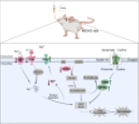
Abstract: Recent studies have indicated that stroke can lead to neuronal iron overload and lipid peroxidation. Lycium barbarum glycopeptide, which has a low molecular weight and potent antioxidant properties, may mitigate ferroptosis in stroke. We hypothesized that Lycium barbarum glycopeptide can effectively mitigate iron overload within ischemic neurons due to its robust antioxidant properties. The aims of this study were to investigate the effects of Lycium barbarum glycopeptide on ferroptotic damage following brain ischemia and explore the underlying mechanisms. A rat model of middle cerebral artery occlusion was established using the intraluminal filament method, and the rats were treated with Lycium barbarum glycopeptide for 7 consecutive days, beginning 24 hours after ischemia. Liproxstatin-1, a ferroptosis inhibitor, and Erastin, a ferroptosis activator, were used as controls. We found that treatment with Lycium barbarum glycopeptide resulted in significant reductions in infarct volume (as detected by triphenyltetrazolium chloride staining staining and magnetic resonance imaging) and neuronal death (as measured by Nissl staining), as well as improvements in sensory and motor functions in rats subjected to middle cerebral artery occlusion. Furthermore, treatment with Lycium barbarum glycopeptide alleviated anxiety and depression-like behaviors and improved memory. Additionally, Lycium barbarum glycopeptide effectively reduced the iron ion content in the ischemic penumbra of the cortex. Moreover, treatment with Lycium barbarum glycopeptide downregulated the expression of ferroptotic and oxidant proteins such as transferrin receptor 1, divalent metal transporter 1, and Acyl-CoA synthetase long-chain family member 4 and upregulated the expression of anti-ferroptotic and antioxidant proteins such as ferroportin 1, solute carrier family 7 member 11, glutathione, and glutathione peroxidase 4. However, these beneficial effects were reversed when ferroptosis was induced with the activator Erastin. Therefore, the positive effects of Lycium barbarum glycopeptide in ischemic stroke are likely mediated through activation of the antiferroptotic pathway and the antioxidative System Xc-glutathione-glutathione peroxidase 4 pathway. Overall, our findings highlight the potential use of Lycium barbarum glycopeptide as a neuroprotective agent targeting both ferroptosis and oxidation to decrease ischemic brain damage.

Key words: antioxidation, anxiety, cerebral ischemic, depression, inflammation, iron overload, Lycium barbarum glycopeptide, magnetic resonance imaging, memory, neurological function, neuroprotection