NRR: 中国佛山市第一人民医院王汉兵团队和上海交通大学松江研究院王杰团队开发一种选择性稀疏标记星形胶质细胞的双AAV系统#br#
#br#
撰写:李梅,柳壮#br#
#br#
星形胶质细胞是中枢神经系统(CNS)中最常见的胶质细胞类型,约占脑细胞总量的20-40%,在维持神经稳态和支持神经元功能中起关键作用[1,2]。活化的星形胶质细胞在不同生理和病理条件下表现出显著的形态和功能异质性,这种异质性与其所在脑区的功能需求密切相关。例如,在皮层灰质中,星形胶质细胞呈现复杂的星状形态,通过广泛的分支网络与突触和血管相互作用,支持神经信号传递和血流调节;而在海马或丘脑等区域,其形态特征可能与学习记忆或感觉信息处理相关。研究表明,星形胶质细胞在神经退行性疾病和急性脑损伤中通过释放神经营养因子或调节炎症反应,发挥保护或损伤作用。然而,传统研究方法存在局限性:免疫染色(如GFAP标记)难以完整呈现其复杂形态,染料注射法效率低且样本量受限,转基因小鼠模型则因物种特异性和繁育周期长而应用受限。因此,如何高效、特异性地标记并分析星形胶质细胞的全脑形态异质性,以及探索其在健康和疾病状态下的功能,仍是神经科学领域的关键挑战。针对这一问题,中国佛山市第一人民医院王汉兵团队和上海交通大学松江研究院王杰团队在《中国神经再生研究(英文)》(Neural Regeneration Research)发表的研究中,共同开发了一种双腺病毒系统(DAS),用于小鼠大脑中星形胶质细胞的选择性和稀疏标记,并在多个脑区验证了其高效性。研究通过GfaABC1D启动子驱动Cre重组酶和EGFP表达,利用尾静脉注射PHP.eB病毒或立体定位注射,在C57BL/6J小鼠的12个脑区实现特异性标记。结合共聚焦显微镜三维重建,研究揭示了星形胶质细胞在分支复杂度、面积大小等方面的形态异质性。此外,通过坐骨神经分支选择性损伤(SNI)模型和化学遗传学操作,DAS不仅能清晰呈现细胞形态,还可调控细胞功能,显示出其在形态与功能研究中的双重潜力。进一步分析表明,不同脑区的形态差异可能与其分区功能相关。该技术为研究星形胶质细胞在健康和疾病中的作用提供了新工具,未来有望在神经科学研究及疾病模型中发挥重要作用。该研究为星形胶质细胞异质性及其功能机制的深入探索奠定了基础。此外,该系统还被验证可用于化学遗传学操作,为研究星形胶质细胞的功能提供了新工具。探索DAS的应用,不仅有助于理解星形胶质细胞的结构异质性机制,还可能为神经疾病的干预提供新策略。#br#
#br#
星形胶质细胞是中枢神经系统中最常见的胶质细胞,广泛参与突触支持、离子稳态和神经血管耦合等功能[3-6]。研究表明,其形态和功能在不同脑区存在显著异质性,这种异质性可能反映脑区特异性功能需求及其在神经疾病中的作用。该研究聚焦于如何高效、特异性地标记星形胶质细胞,并在全脑范围内系统分析其形态差异,以及探索其功能调控潜力。研究者利用双腺病毒系统(DAS)结合Cre-loxP技术,逐步实现了星形胶质细胞的选择性稀疏标记,进而揭示其形态异质性,并通过化学遗传学验证了该系统的功能元件加载能力。#br#
#br#
为验证这一假说,研究设计了一种基于GfaABC1D启动子的DAS系统,通过尾静脉注射PHP.eB病毒或立体定位注射,将Cre重组酶和Loxp-EGFP分别递送至C57BL/6J小鼠脑内(图1)。实验优化了Cre:DIO病毒比例,以确保标记的稀疏性和荧光强度。标记后,利用共聚焦显微镜和图像处理技术对12个脑区的星形胶质细胞进行三维重建,并提取形态参数(如最大直径、面积大小、分支复杂度)。通过S100β和NeuN共染分析确认了特异性,形态异质性验证则通过Sholl分析和层次聚类量化进行。此外,通过SNI模型和化学遗传学操作(DREADDs),验证了DAS在功能研究中的适用性。
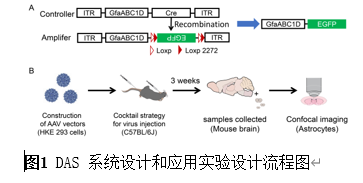
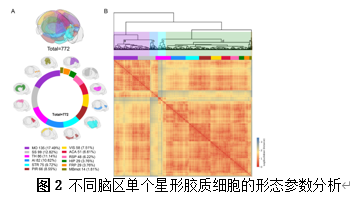
结果显示,DAS系统在标记效率和特异性上表现出色。尾静脉注射1:10比例的病毒后,EGFP标记的星形胶质细胞荧光强度显著高于传统GfaABC1D-EGFP病毒,且细胞间无明显重叠。S100β共染分析表明,12个脑区(运动皮层MO、躯体感觉皮层SS等)的标记特异性均超过85.9%,NeuN阳性率低于5%,即病毒对星形胶质细胞的高选择性。在形态分析中,研究者重建了772个单个的星形胶质细胞,覆盖MO(135个)、SS(99个)、丘脑(TH,88个)等区域。层次聚类将形态特征分为五类,MO区域细胞高度一致,SS和TH则变异较大,这表明形态异质性与不同解剖和结构的脑分区功能相关(图2)。
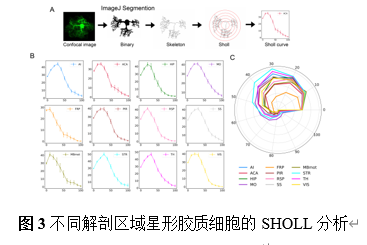
Sholl分析显示,MO和SS的星形胶质细胞在25μm范围内分支交叉点最多,反映其网络复杂性,而纹状体(STR)分支总数最高,中脑运动核(MBmot)最低。图论参数进一步揭示,MO和SS的面积大小和节点数高于VIS和ACA,而后者图密度较高,提示网络结构更紧凑(图3)。
功能验证实验中,研究者通过立体定位注射携带化学遗传原件的DAS至前扣带皮层(ACC),再结合SNI模型和CNO处理,发现CNO组分支复杂度增加。行为学测试(高架十字迷宫)显示,CNO组小鼠开放臂探索时间减少(P<0.001),提示焦虑行为增强,与分支变化一致。这些结果表明,DAS不仅能标记形态,还可通过化学遗传学调控细胞活性,揭示了其在慢性痛共病焦虑中对星形胶质细胞角色的研究潜力。
DAS系统弥补了传统方法的不足,其高特异性和稀疏标记能力为全脑尺度研究星形胶质细胞提供了新工具。作者通过形态异质性分析揭示了脑区的异质性图形参数特点:MO和SS的复杂分支可能支持运动和感觉处理,VIS的高图密度或与视觉整合相关,初步提示了形态与功能的耦合关系。进一步的功能实验则验证了DAS的多功能性,为研究星形胶质细胞在疾病中的动态变化提供了研究思路。综合来看,DAS技术拓宽了星形胶质细胞研究的维度,其应用为理解特异细胞在神经网络中的作用奠定了基础。
然而,研究仍留有未解问题。GfaABC1D启动子的特异性非绝对,少量非星形胶质细胞标记可能影响结果准确性。此外,形态分析基于固定样本,未能捕捉活体状态下的动态变化。下一步研究可通过引入miRNA靶向序列优化特异性,或结合双光子显微镜实现活体成像,探索星形胶质细胞在实时神经活动中的反应。进一步整合分子谱等组学数据,有望揭示形态异质性背后的分子机制。这些改进将推动DAS技术在神经科学中的更广泛应用,为神经疾病干预提供新靶点。
总之,双腺病毒系统(DAS)对选择性稀疏标记星形胶质细胞及其形态与功能研究具有重要价值。本研究表明,DAS利用GfaABC1D启动子驱动Cre-loxP系统,在小鼠全脑范围内实现了星形胶质细胞的高效标记,揭示了12个脑区的形态异质性,并通过化学遗传学验证了其功能调控潜力。DAS的稀疏标记特性显著提升了荧光强度和细胞分辨率,避免了传统AAV载体标记中细胞重叠的难题,并在SNI模型中成功调控焦虑行为,验证了其搭载功能元件的有效性。这一技术不仅为解析星形胶质细胞在健康和疾病中的作用提供了新工具,也为AAV载体在神经科学中的精准应用奠定了基础。
当然,该研究存在一定局限性。首先,仅使用C57BL/6J雄性小鼠,且形态分析局限于注射后14天。为提升临床转化潜力,未来需纳入雌性小鼠并考察更多时间点(如7天或28天)的动态变化。其次,GfaABC1D启动子特异性非绝对,少量非星形胶质细胞的标记可能影响精确性。此外,尾静脉注射受血脑屏障限制,递送效率有限。理想情况下,可优化AAV载体血脑屏障渗透性或采用局部注射提升效率。结合AAV在临床基因治疗中的应用,DAS的稀疏标记优势可进一步开发,用于靶向特异细胞类型的基因递送。未来通过活体成像和分子表达谱分析揭示形态异质性的机制,或将推动DAS在神经退行性疾病和精神障碍精准治疗中的应用潜力。
原文链接:https://doi.org/10.4103/NRR.NRR-D-24-01607
参考文献
[1] Allen NJ, Lyons DA. Glia as architects of central
nervous system formation and function. Science. 2018;362:181-185.
[2] Zhou
B, Chen L, Liao P, et al. Astroglial dysfunctions drive aberrant synaptogenesis
and social behavioral deficits in mice with neonatal exposure to lengthy
general anesthesia. PLoS Biol. 2019;17:e3000086
[3] Díaz-Castro B, Robel S, Mishra A. Astrocyte endfeet
in brain function and pathology: open questions. Annu Rev Neurosci. 2023;46:101-121.
[4] Giovannoni
F, Quintana FJ. The role of astrocytes in CNS inflammation. Trends Immunol.
2020;41:805-819.
[5] Murphy-Royal
C, Ching S, Papouin T A conceptual framework for astrocyte function. Nat
Neurosci .2023;6:1848-1856.
[6] Oliveira JF, Araque A.
Astrocyte regulation of neural circuit activity and network states. Glia. 2022;70:1455-1466.
#br#
